Category: Ibex Hunting

  • Planning a Spanish Ibex Grand Slam: Logistics, Costs, and Timeline

    A Multi-Year Pursuit Worth Planning For

    In our guide to Spain’s four ibex subspecies, we touched on the Spanish Ibex Grand Slam — the pursuit of all four distinct subspecies: Beceite, Gredos, Southeastern, and Ronda. For many hunters, this becomes less a single trip and more an ongoing project spread across several years, each hunt adding to a collection that few hunters ever complete. If you’ve hunted one Spanish subspecies and are considering the full slam, or you’re planning from scratch with the slam as your goal from day one, this guide walks through how to actually structure that pursuit.

    Revisiting the Four Subspecies

    As a quick reference before diving into planning specifics:

    • Beceite — Maestrazgo mountain range, northeastern Spain (Tarragona, Teruel, Castellón provinces). Generally the most heavily hunted, with well-established outfitting infrastructure.
    • Gredos — Sierra de Gredos, central Spain, west of Madrid. Known for heavier, more flared horns than the other three.
    • Southeastern — Sierra Nevada and Sierra de Cazorla, Andalusia. Some of the most rugged terrain of the four.
    • Ronda — Serranía de Ronda, southern Spain near Málaga. Historically the smallest population and often the most difficult permit to draw.

    Sequencing Your Hunts

    There’s no strictly required order for completing the slam, but a few practical factors tend to influence how experienced hunters and outfitters sequence it:

    • Permit availability often dictates timing more than personal preference. Ronda, given its smaller historical population, can involve longer waits or more limited availability in a given season, which leads some hunters to pursue it later once they better understand the permit cycle, or earlier specifically to get a difficult tag out of the way.
    • Geographic pairing can reduce total trips. As we noted in our subspecies guide, some hunters combine two hunts into a single trip — Beceite in the northeast paired with Gredos in central Spain is a commonly cited combination, given the relatively manageable travel distance between the two regions compared to reaching Andalusia or back again.
    • Building difficulty progressively is a common approach. Some hunters prefer starting with Beceite, given its accessibility and strong outfitter infrastructure, and building experience with Spanish terrain and hunting style before tackling the more rugged Southeastern terrain or the more competitive Ronda permit.

    Timeline Expectations

    Given permit availability, seasonal timing, and the practical realities of international travel, most hunters complete a Spanish Ibex Grand Slam across two to four separate trips spread over two to five years, though highly motivated hunters with flexible schedules and strong outfitter relationships have compressed this considerably. Rushing the timeline by trying to force multiple hunts into a single season can work against you if it means compromising on outfitter quality or permit timing for any individual subspecies.

    As covered in our seasons guide, Spanish ibex hunting generally runs late summer through winter, with specific dates varying by region and subspecies — worth keeping in mind as you plan which subspecies to pursue in which season across your multi-year timeline.

    Cost Considerations Across the Full Slam

    As we outlined in our cost guide, Spanish ibex hunts sit at the more accessible end of the ibex cost spectrum individually, but a full slam still represents a meaningful cumulative investment once you account for four separate trophy fees, four sets of international travel, and outfitter costs across each trip. Combining hunts geographically, as mentioned above, is one of the more effective ways to manage total cost, since it reduces the number of separate international trips required from four down to two or three.

    It’s also worth budgeting for the fact that trophy fees typically scale with horn size, meaning a slam pursued with an eye toward exceptional trophies on each subspecies will cost meaningfully more than one where representative, mature animals are the goal.

    Working With an Experienced Outfitter

    Not every Spanish outfitter has strong relationships and access across all four subspecies’ regions, since each ties to a specific mountain range with its own local permit process. As we covered in our outfitter guide, it’s worth asking directly whether a prospective outfitter has experience specifically coordinating multi-subspecies or combination-trip bookings, rather than assuming general Spanish ibex experience translates evenly across all four regions.

    Where This Fits

    A Spanish Ibex Grand Slam is a natural extension for hunters who’ve already completed one subspecies and want a longer-term goal to build toward, and it pairs well as a multi-year project alongside other mountain hunting pursuits covered elsewhere on this site. Whether you’re one hunt in or just starting to plan, the fundamentals remain the same as any other Spanish ibex hunt: understanding permit timing, working with an experienced outfitter, and being realistic about the timeline a genuine slam requires.
  • How to Choose a Mountain Hunting Outfitter: Questions to Ask Before You Book

    Why the Outfitter Matters More Here

    Across every guide on this site, one theme keeps resurfacing: guides and outfitters play an outsized role in ibex hunting compared to many other big game pursuits. Local knowledge of specific valleys, animal behavior, and terrain isn’t a nice-to-have on an ibex hunt — it’s often the difference between a successful stalk and days of fruitless glassing. That makes outfitter selection arguably the single most consequential decision in planning your hunt, more so than the specific rifle or optics you bring.

    This guide walks through the questions worth asking before you commit to booking, organized around the areas that tend to separate a well-run hunt from a disappointing one.

    Questions About Experience and Track Record

    • How long has the outfitter operated specifically in this region? Longevity in a specific mountain range or valley system matters more than overall years in business, given how much local, animal-specific knowledge factors into ibex hunting success.
    • What’s their success rate for the specific species and subspecies you’re after? A strong overall success rate doesn’t always translate evenly across every subspecies or trophy class an outfitter offers — ask specifically about the hunt you’re booking, not their broader statistics.
    • Can they provide references from recent hunters? Recent references, ideally from within the last season or two, tell you more than testimonials that may reflect a different era of the operation’s management or guide staff.

    Questions About Logistics and Access

    • What’s included in the quoted price, and what isn’t? As we covered in our cost guide, trophy fees are typically separate from the base hunt price, but ask specifically about what else might be additional — lodging, ground transportation, gratuities, or trophy preparation.
    • How many hunters are in camp at the same time, and what’s the guide-to-hunter ratio? A lower ratio generally means more individualized attention and flexibility to adjust your hunt as conditions change, particularly relevant given how much ibex hunting relies on adapting to where animals are actually located.
    • What does a typical day look like? Understanding the pace — early starts, extended glassing, how stalks are typically approached — helps you gauge whether the operation’s style matches your expectations and physical preparation.

    Questions About Permits and Regulations

    • Who holds the hunting permits, and how are they secured? Given how much ibex hunting regulation varies by region — cantonal in parts of the Alps, autonomous community in Spain, national quota systems in Central Asia — a reputable outfitter should be able to explain clearly how they secure access and what happens if regulations shift.
    • What happens if a permit or quota changes before your hunt? Regulations can shift year to year, as we’ve noted throughout our regional guides, and it’s worth understanding an outfitter’s policy for handling this kind of change well before you’re relying on it.
    • Are there current health, visa, or firearm import requirements you should know about? This matters most for international destinations like Central Asia and the Himalayas, where bureaucratic requirements can be significant and outfitters experienced in navigating them add real value.

    Questions About Contingencies

    • What’s the policy if you don’t harvest an animal? Some outfitters offer partial credit toward a future hunt, others don’t — understanding this upfront avoids a difficult conversation after an unsuccessful trip.
    • What happens if weather or access issues shorten the hunt? Given how weather-dependent access can be, particularly in Central Asia and the Himalayas, it’s worth understanding how an outfitter handles a compressed or interrupted hunting window.
    • Is trip insurance recommended or required, and does the outfitter have a relationship with a specific provider? As we touched on in our cost guide, insurance is worth serious consideration given the remoteness and physical demands of many ibex hunts.

    Red Flags Worth Taking Seriously

    A few patterns are worth treating as genuine warning signs rather than minor concerns: reluctance to provide recent references, vague or shifting answers about what’s included in the price, an inability to clearly explain how permits and quotas work in their specific region, or pressure to book quickly without time to do this kind of due diligence. A reputable outfitter, particularly one operating in a well-established destination, should welcome these questions rather than treat them as an inconvenience.

    Where This Fits

    The right outfitter question list shifts somewhat by destination — Spanish and Alpine hunts lean more heavily on permit and access questions, while Central Asian and Himalayan hunts add layers around logistics, visas, and contingency planning given the added remoteness. Whichever destination you’re considering, working through these questions before booking is what turns outfitter selection from a leap of faith into an informed decision.

  • Best Boots for Steep Alpine Terrain: A Mountain Hunter’s Buying Guide

    This article contains affiliate links. If you make a purchase through one of these links, we may earn a small commission at no extra cost to you. Learn more on our Affiliate Disclosure page.

    Why Boots Matter in Mountain Country

    On an ibex hunt, boots do far more than keep your feet dry. They determine how confidently you move across loose rock, how well you hold an edge on steep sidehills, and how much fatigue builds up over the course of a long day climbing and descending. In steep alpine terrain, poor footwear becomes a problem quickly, while the right pair quietly supports every step.

    This guide looks at the boot features that matter most for ibex hunting, how to think about fit and stiffness, and where hunters should prioritize spending when choosing mountain footwear.

    What Steep Alpine Terrain Demands

    Ibex country is rarely forgiving underfoot. Hunters can expect long climbs, loose scree, wet grass, broken rock, and uneven descents that punish ankles and knees. A boot suited to this environment needs to provide real support under load while still allowing enough comfort for full days on the mountain.

    • Stiffness: A stiffer sole helps with edging on steep slopes and reduces foot fatigue on rocky ground.
    • Ankle support: Higher-cut boots with strong structure help stabilize the foot on uneven terrain.
    • Traction: Deep, dependable lugs matter on loose dirt, wet ground, and rock.
    • Weather protection: Waterproofing can be valuable in alpine conditions, though it should not come at the cost of poor fit.
    • Durability: Sharp rock and repeated elevation change expose weak materials quickly.

    Fit Comes Before Features

    The best-reviewed mountain boot is still the wrong boot if it does not fit your foot shape. Heel slip, toe bang on descents, and pressure points become much more serious after several hours at elevation. Hunters should focus first on a secure heel, enough room in the toe box for downhill movement, and a lacing system that lets the foot stay locked in place without creating hot spots.

    Whenever possible, train in the same socks and insoles you plan to use on the hunt. Fit should be evaluated on climbs and descents, not just while standing in a store or around the house.

    Choosing the Right Stiffness

    For steep alpine ibex terrain, many hunters prefer a medium-stiff to stiff mountain boot. Lighter hikers may feel comfortable at first, but they often show their limits once a hunter is carrying a pack across broken slopes for a full day. A more supportive platform usually pays off in sidehilling stability and reduced foot fatigue, even if it feels less casual off the mountain.

    If your hunt involves steep traverses, loose rock, and long descents, support matters more than all-day casual comfort.

    Where to Spend Your Money

    Boots are one of the few categories where spending more often does buy meaningful performance. Better mountain boots typically offer stronger midsoles, more durable uppers, better rubber compounds, and more precise fit systems. If a hunter has to prioritize gear spending for an ibex hunt, boots belong near the top of the list alongside optics.

    That does not mean the most expensive model is automatically best. It means that once you identify a boot that fits your foot well, paying for mountain-specific support and durability is usually money well spent.

    Break Them In Before the Hunt

    No mountain boot should make its first real outing on the hunt itself. Break-in should happen over weeks or months, ideally during hikes with elevation gain and pack weight. This helps soften the boot where appropriate, confirms that the fit remains sound under real use, and gives you time to solve problems before travel.

    The Bottom Line

    For ibex hunting in steep alpine terrain, the right boot is one that fits securely, supports confidently, and holds up under repeated climbing and descending. Choose fit first, prioritize stiffness and traction appropriate to mountain ground, and give yourself enough time to train in the pair you plan to hunt in. Good boots will not make the mountain easier, but they will make you far more capable on it.

    The Mountain Hunter Recommendations

    Our Pick: Kenetrek Mountain Extreme — built specifically for steep, technical alpine terrain

    Kenetrek Mountain Extreme

    Built for the most demanding terrain you’ll encounter on a mountain hunt — steep, rocky, and above timberline. The 10" full-grain leather upper and 7mm nylon midsole provide serious stability and support for heavy pack loads, while the K-Talon outsole delivers reliable traction on scree and technical ground. This is a stiffer, heavier boot than the Attiva Mid GTX above, with a break-in period to match — but for extended time on genuinely steep, unforgiving terrain, that added rigidity is exactly what protects your ankles and keeps you sure-footed.

    Lighter Alternative: Crispi Attiva Mid GTX — better suited to early-season or lower-intensity approach hikes

    A lightweight, agile boot built for hunters who prioritize speed and mobility over heavy-duty stiffness — at under 1 lb. per boot, it’s noticeably lighter than most technical mountain boots. The Gore-Tex lining keeps feet dry, and Crispi’s Thermo Wire Technology adds ankle support and stability without adding bulk. Best suited for early-season hunts, scouting trips, and approach hikes rather than the most extreme technical alpine terrain — pair it with a stiffer boot if your hunt involves serious scree fields or glacier travel.

  • Best Optics for Long-Range Glassing in Ibex Country

    Best Optics for Long-Range Glassing in Ibex Country

    Why Optics Matter in Ibex Country

    Ibex hunting is as much a glassing game as it is a shooting game. In steep, open country, hunters often spend far more time behind binoculars and spotting scopes than they do behind a rifle. The right optics help you locate animals earlier, judge horn size more confidently, and avoid wasting energy on unnecessary stalks across punishing terrain.

    This guide looks at the core optics categories that matter most for ibex hunting and explains how to think about them in practical, field-focused terms rather than marketing claims alone.

    Binoculars First

    For most hunters, binoculars are the single most important optics purchase for an ibex hunt. They are the tool you will use hour after hour while picking apart distant ridgelines, shadowed ledges, and broken scree slopes. A quality 10×42 binocular remains a strong all-around choice because it balances magnification, field of view, brightness, and packability well enough for long days in the mountains.

    Some hunters prefer stepping up in magnification for more open country, but higher magnification also makes handholding less steady and increases eye fatigue over the course of a long glassing session. In practical terms, comfort and clarity often matter more than chasing maximum power on paper.

    When a Spotting Scope Earns Its Weight

    A spotting scope becomes especially valuable when you need to evaluate an ibex before committing to a long stalk. In many mountain ranges, the ability to study horn shape, length, and mass from a fixed glassing point can save hours of climbing toward an animal that does not meet your expectations or local standards.

    The tradeoff is obvious: spotting scopes add weight and bulk to your kit. For that reason, they make the most sense when you expect to glass from stationary vantage points for extended periods, or when your guide can share the load and help decide when detailed evaluation is worth the extra effort.

    Rangefinders Are Not Optional

    In ibex country, distance can be deceptive. A ram or billy across a drainage may appear closer than it really is, and steep uphill or downhill angles complicate the shot further. A dependable rangefinder with angle compensation is one of the most practical pieces of optics equipment you can carry because it removes guesswork at the moment it matters most.

    Even if your intended shooting distance is moderate, your rangefinder should perform beyond that distance reliably. Mountain terrain often forces you to range across open space, rock faces, and uneven backgrounds that can challenge lower-performing units.

    What to Prioritize

    • Optical clarity over extreme magnification
    • Comfort for long glassing sessions
    • Durability in wet, cold, and dusty conditions
    • Reasonable weight for all-day mountain travel
    • Reliable ranging performance in steep terrain

    Building a Smart Optics Budget

    If your budget forces tradeoffs, most mountain hunters are better served by investing in the best binoculars they can reasonably afford before overspending on other categories. You will spend far more time looking through binoculars than through a riflescope on any ibex hunt. Good glass reduces eye strain, improves animal detection, and helps you stay effective late into the day when concentration starts to fade.

    A spotting scope can be added later if your hunting style or destination justifies it. Boots, fitness, and glassing skill still matter enormously, but among gear purchases, optics are one of the few categories where quality directly affects nearly every hour of the hunt.

    The Bottom Line

    The best optics for long-range glassing in ibex country are the ones that help you see more, judge better, and move with confidence in steep terrain. Start with dependable binoculars, add a spotting scope when your destination or trophy expectations call for it, and never overlook the value of a capable rangefinder. In mountain hunting, the ability to see well is often the ability to hunt well.

  • Physical Preparation for Ibex Hunts: Training for Altitude and Steep Terrain

    Physical Preparation for Ibex Hunts: Training for Altitude and Steep Terrain

    Why Preparation Matters

    Ibex hunts demand more than marksmanship. Steep climbs, thin air, unstable footing, and long days under load can expose weaknesses quickly, especially for hunters coming from flatter country or lower elevations. Physical preparation does not guarantee an easy hunt, but it can improve safety, stamina, and your ability to capitalize on the shot opportunity you worked hard to create.

    This guide outlines the main areas hunters should focus on before an ibex trip: cardiovascular fitness, leg and core strength, pack conditioning, altitude preparation, and recovery. The goal is not to train like a professional athlete. It is to arrive ready for repeated climbs, uneven terrain, and the cumulative fatigue that mountain hunting creates.

    Cardio for Long Climbs

    Most ibex hunts involve sustained uphill movement rather than short bursts of effort. That makes aerobic conditioning one of the most useful places to invest your training time. Hiking on steep terrain is ideal when available, but stair machines, incline treadmills, hill repeats, and loaded walks can all help build the engine needed for mountain travel.

    A practical target is to build enough base fitness that you can sustain moderate effort for extended periods without redlining early in the day. Many hunters benefit from training three to five days per week, with at least one session focused on longer-duration effort rather than intensity alone. Consistency matters more than any single workout.

    Strength for Steep Terrain

    Mountain hunting punishes weak legs and unstable hips. Squats, lunges, step-ups, split squats, deadlifts, and calf work all translate well to climbing and descending with control. Core strength matters too, particularly when carrying a pack across sidehills or shooting from awkward positions after a hard push uphill.

    The goal is functional durability rather than bodybuilding. Moderate weight, controlled movement, and repetition over time tend to serve hunters better than chasing one-rep strength numbers. If you are new to strength training, even a simple two-day-per-week program can make a meaningful difference by the time your hunt arrives.

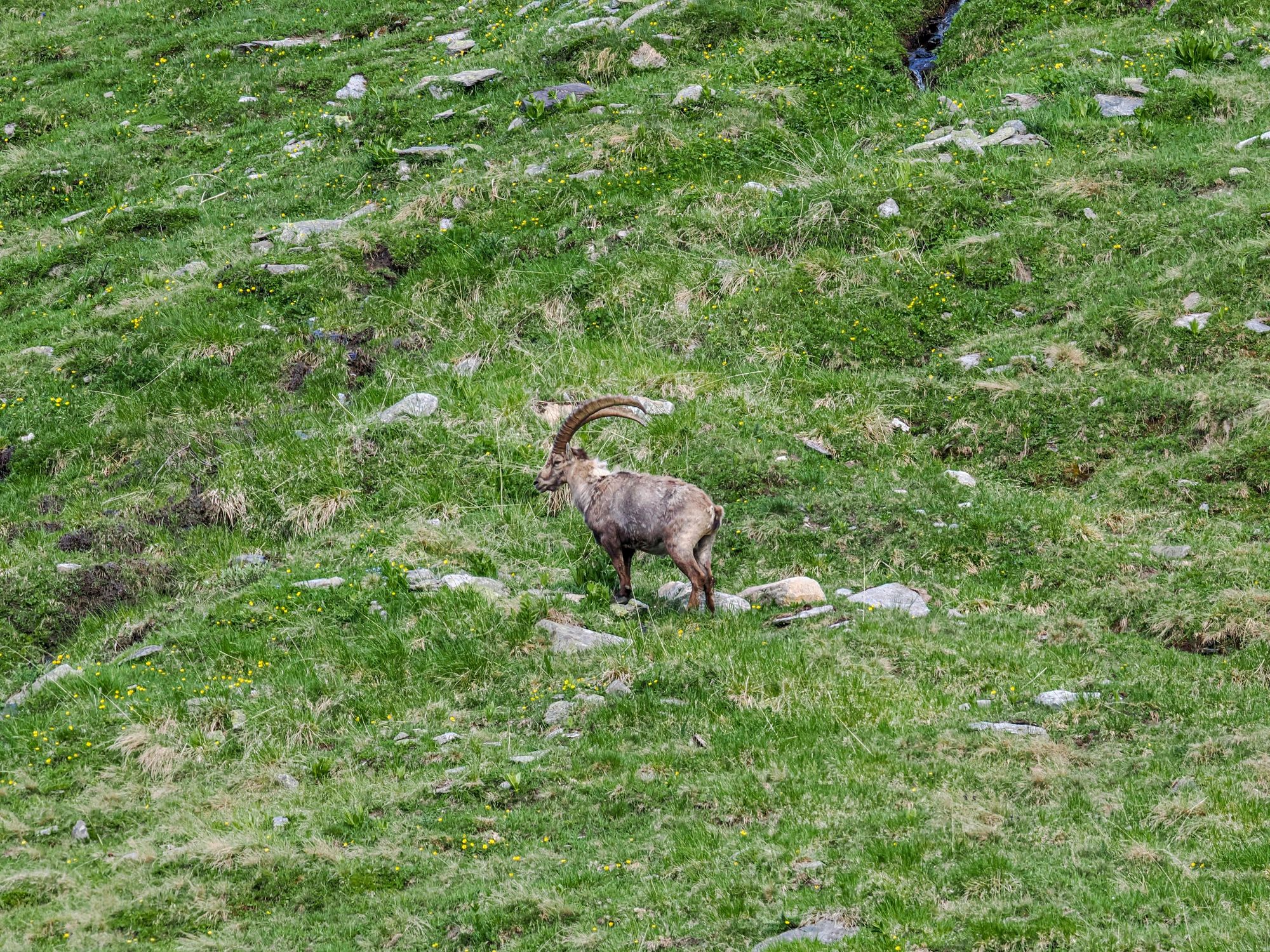
    Alpine Ibex Grazing on Vast Green Mountain Meadow

    Train Under Load

    A hunt pack changes how your body handles distance and elevation. Even if your day pack is not especially heavy, carrying optics, layers, water, and rifle support gear over steep ground adds up. Training hikes with a gradually increasing pack weight help condition your feet, shoulders, and lower back while also exposing fit issues before the trip.

    Start lighter than you think you need and build progressively. The purpose is not to grind yourself into the ground but to adapt your body to moving efficiently with weight. This is especially important for descents, where fatigue and poor foot placement can create more problems than the climb itself.

    Preparing for Altitude

    Altitude affects hunters differently, and no amount of toughness fully substitutes for acclimatization. If your hunt will take place well above your home elevation, ask your outfitter how many acclimatization days are built into the itinerary and resist the urge to treat them as optional. Arriving fitter can help you cope better, but it does not eliminate the physiological stress of thin air.

    Hydration, sleep, pacing, and honest communication with your guide all matter once you are in the mountains. Hunters planning Central Asian or Himalayan trips should think about altitude as a central part of preparation rather than a minor detail. It is one of the clearest differences between those hunts and more accessible ibex destinations.

    Mobility and Recovery

    Training only works if you can recover from it. Tight hips, stiff ankles, and poor recovery habits can limit progress long before your lungs do. Basic mobility work, regular walking, sleep, and enough recovery between harder sessions all help you stay consistent through the months leading up to a hunt.

    Foot care also deserves attention. Boots should be broken in well before departure, and training hikes are the best place to identify hot spots, sock issues, or lacing problems while there is still time to fix them.

    A Practical Timeline

    If possible, begin preparing at least three to four months before your hunt, and longer if you are starting from a low fitness base. Early weeks should focus on building consistency and movement quality. As the trip gets closer, shift toward more hunt-specific work: steeper hikes, more pack time, and longer efforts on tired legs. The final goal is simple: show up able to keep moving, recover overnight, and still make a steady shot when the opportunity comes.

    Where This Fits

    Physical preparation is one of the few parts of an ibex hunt fully under your control. It will not flatten the mountain or shorten the stalk, but it can make the entire experience safer, more enjoyable, and more productive. Hunters pairing this preparation with realistic gear choices and a clear understanding of season timing give themselves a much stronger foundation before they ever leave home.

  • Rifle, Caliber, and Equipment Choices for Ibex Hunting

    Rifle, Caliber, and Equipment Choices for Ibex Hunting

    Why Equipment Matters

    Ibex hunting puts unusual demands on both rifle setup and personal gear. Steep terrain, long glassing sessions, changing weather, and the possibility of longer shots all mean your equipment needs to support mobility, stability, and confidence rather than add unnecessary weight or complication. A setup that works well from a blind or truck may feel very different after several hours of climbing above the tree line.

    This guide covers the practical rifle, caliber, and gear considerations that matter most across Spanish, Alpine, Central Asian, and Himalayan ibex hunts.

    Alpine Ibex Grazing on Vast Green Mountain Meadow

    Rifle Priorities

    The best ibex rifle is usually one you already shoot well, provided it is accurate, dependable, and light enough to carry comfortably in steep country. Most hunters benefit from a rifle that balances portability with enough barrel length and stability to shoot confidently from improvised mountain positions. Excessively heavy rifles can become a liability on long climbs, while ultra-light rifles can be harder to hold steady when a shot opportunity finally appears.

    • Prioritize reliability over novelty.
    • Choose a rifle weight you can carry all day in mountain terrain.
    • Make sure the rifle is accurate from field positions, not just the bench.
    • Use a sling system that helps on steep ascents and descents.

    Choosing a Caliber

    Ibex are not especially hard to kill when hit well, but they are often hunted in open country where wind, angle, and distance matter. That makes flat-shooting, familiar calibers a practical choice. Cartridges in the .270 Winchester, 7mm Remington Magnum, .308 Winchester, .30-06 Springfield, and similar class are commonly well suited, assuming the hunter knows the rifle and load well. The right answer is less about chasing maximum power and more about carrying a cartridge you can place precisely under mountain conditions.

    Shot placement and confidence matter more than raw cartridge size on an ibex hunt.

    Optics and Shot Support

    Good optics are central to ibex hunting because much of the day is spent locating animals at distance and judging whether a billy is worth pursuing. A quality riflescope with dependable tracking and a practical magnification range is more useful than extreme top-end magnification. Binoculars are essential, and many hunts also benefit from a spotting scope shared between hunter and guide. For the shot itself, a bipod, pack, or other stable field rest often matters just as much as the rifle.

    • Use binoculars you can glass with for extended periods.
    • Choose a scope with a practical magnification range and clear reticle.
    • Practice shooting from a bipod, pack, and seated mountain positions.
    • Confirm your zero before travel and again after arrival if possible.

    Clothing and Footwear

    Layering matters more than chasing a single perfect outfit. Conditions can swing from warm sun to wind, rain, or cold mornings in the same day, especially in Alpine and Central Asian terrain. Durable mountain boots with good ankle support are one of the most important gear decisions you will make, and they should be fully broken in well before the trip. Clothing should emphasize mobility, weather protection, and temperature management rather than bulk.

    • Wear broken-in mountain boots with solid traction.
    • Pack layers that handle wind and rapid weather changes.
    • Bring rain protection even when the forecast looks favorable.
    • Use gloves and headwear suited to elevation and early starts.

    Other Gear That Earns Its Place

    Small gear choices can have an outsized effect in the mountains. A well-fitted pack, hydration system, rangefinder, and simple first-aid essentials all contribute directly to comfort and performance. On higher and more remote hunts in Kyrgyzstan, Tajikistan, Pakistan, or Nepal, hunters should also think carefully about altitude, medication planning with a physician, and the extra time needed to test gear before departure.

    • Carry a dependable rangefinder.
    • Use a pack that rides comfortably during steep climbs.
    • Plan hydration and energy intake for long days.
    • Test every critical piece of gear before the hunt.

    The Bottom Line

    The best ibex equipment setup is practical, proven, and matched to the terrain you are actually hunting. A reliable rifle in a familiar caliber, quality optics, stable shooting support, and mountain-ready clothing will serve you better than an overbuilt or overly specialized kit. If you are still narrowing down destinations, pair this guide with our regional ibex articles so your gear choices reflect the demands of Spain, the Alps, or the higher ranges of Central Asia and the Himalayas.

  • What Does an Ibex Hunt Cost? A Region-by-Region Breakdown

    What Does an Ibex Hunt Cost? A Region-by-Region Breakdown

    Why Cost Deserves Its Own Guide

    Ibex hunts vary widely in cost depending on where you go, how remote the hunting area is, how permits are allocated, and how much travel infrastructure is required to reach camp. A Spanish ibex hunt can look relatively straightforward on paper, while a trip to Tajikistan or Pakistan often involves more flights, more logistics, more days in the field, and more support staff. For hunters trying to compare destinations realistically, price is not just a number — it reflects access, terrain, regulation, and the complexity of the hunt itself.

    This guide breaks down the major cost patterns hunters can expect across the main ibex destinations and explains why some hunts sit at a much higher price point than others.

    Spanish Ibex

    Spanish ibex hunts are often considered the most accessible entry point in terms of both logistics and overall cost. Commercial flights into Spain are usually straightforward, internal travel is manageable, and most hunts are relatively short compared to Central Asian trips. Costs still vary by subspecies, trophy quality, region, and whether the hunt is arranged on private ground or through a concession structure, but Spain generally remains the most approachable place to begin.

    Hunters pursuing the full Spanish Ibex Grand Slam should expect the total investment to build over multiple trips unless two subspecies are combined into one itinerary. That combined approach can reduce travel expense, but permit availability and outfitter coordination still shape the final number.

    Alpine Ibex

    Alpine ibex hunts typically sit above Spain in cost, driven in part by stricter quota systems, limited permit availability, and the management structure used across the Alps. In destinations like Switzerland and Austria, the hunt often reflects not only access to a mature billy but also the administrative framework behind the tag itself. That means hunters are often paying for rarity and regulation as much as for the field experience.

    Travel within Europe is still relatively efficient, which helps contain some costs compared to more remote regions. Even so, Alpine ibex should usually be viewed as a premium European hunt rather than a budget alternative.

    Alpine Ibex Grazing on Vast Green Mountain Meadow

    Central Asian Ibex

    Kyrgyzstan and Tajikistan usually represent a clear jump in cost from European ibex destinations. The reasons are practical: longer travel, remote camps, more in-country transport, horse support, additional staff, and more days built into the hunt for access and acclimatization. In Tajikistan, hunts that are paired with Marco Polo sheep climb even higher, often moving into an entirely different budget category.

    Kyrgyzstan is often viewed as the better value entry point into Central Asia because of its more established outfitting infrastructure. Tajikistan, while highly appealing for trophy quality and species combinations, generally requires a larger financial commitment.

    Himalayan Ibex

    Pakistan and Nepal add another layer of complexity to pricing because permit systems, concession structures, and travel logistics can vary significantly from one area to another. In Pakistan especially, community-based conservation models can shape trophy fees and hunt pricing in ways that differ from the more outfitter-centered structures hunters may be used to elsewhere. Remote access, domestic travel, and timeline uncertainty can all influence the final cost.

    These hunts are rarely chosen because they are inexpensive. They appeal to hunters looking for a more remote and demanding experience, and the pricing usually reflects that reality.

    What Drives the Price

    • Permit availability: Limited tags and quota systems raise prices quickly.
    • Travel complexity: More flights, overland transfers, and days in transit increase total trip cost.
    • Camp support: Horses, drivers, cooks, and local guides all add to the operational side of the hunt.
    • Trip length: A five-day Spanish hunt and a two-week Central Asian hunt are priced on very different foundations.
    • Species combinations: Pairing ibex with species like Marco Polo sheep can shift a hunt into a much higher bracket.

    The Bottom Line

    There is no single price for an ibex hunt because there is no single ibex experience. Spain usually offers the most approachable starting point, Alpine hunts carry a premium tied to quota and rarity, and Central Asian or Himalayan hunts demand a larger investment because of altitude, remoteness, and logistics. The right comparison is not simply cheapest versus most expensive — it is which destination best matches your experience, goals, and willingness to take on travel complexity.

    Before booking, confirm exactly what is included in the quoted price: trophy fees, permits, rifle import assistance, internal transfers, observer rates, and export or shipping costs can all change the real total more than hunters expect.

  • Ibex Hunting Seasons: A Region-by-Region Timing Guide

    Ibex Hunting Seasons: A Region-by-Region Timing Guide

    Why Timing Deserves Its Own Guide

    Unlike many big game hunts where “the season” is a single, well-defined window, ibex hunting spans multiple countries, regions, and management systems — each with its own dates, permit cycles, and weather-driven realities. What works for a Spanish ibex hunt won’t translate to Kyrgyzstan, and even within a single country, timing can shift from one region to the next. Getting this wrong doesn’t just mean an inconvenient trip — it can mean the difference between hunting animals in the rut and hunting them scattered and skittish, or between a smooth approach and a weather-shortened trip.

    This guide pulls together the timing considerations we’ve touched on across our regional guides into one reference, so you can compare windows across destinations as you plan.

    Spanish Ibex

    Spanish ibex seasons generally run from late summer through winter, though exact dates are set at the regional rather than national level and vary by subspecies and autonomous community. The rut typically falls in late fall, drawing hunters who want billies more active and visible during daylight hours — though this window also brings colder, less predictable weather at elevation. Because regulations can shift year to year, confirming current dates with your outfitter before booking travel is essential.

    Alpine Ibex

    Alpine ibex seasons generally fall in late summer through autumn, with specific dates set by each country’s or region’s wildlife management authority rather than uniformly across the Alps. Many hunters target the pre-rut period in early autumn, when billies remain accessible in relatively open terrain before winter weather pushes animals down to lower elevations. As with Spain, quotas and season dates can vary from year to year and should be confirmed directly with your outfitter.

    Central Asian Ibex (Kyrgyzstan & Tajikistan)

    Central Asian ibex hunts are concentrated in a narrower late-summer to early-fall window, driven primarily by weather and road or trail access into remote valleys rather than hunting regulations alone. High mountain passes can become impassable once winter weather arrives, which compresses the practical hunting calendar significantly compared to European destinations. Outfitters in this region plan trips around this access window first and around herd behavior second.

    Himalayan Ibex (Pakistan & Nepal)

    Similarly dictated by weather and access, Himalayan ibex hunts in Pakistan and Nepal generally cluster around the same late-summer to early-fall period as Central Asian destinations, though specific timing can vary by concession and elevation. Given the remoteness of many hunting areas, permit and travel timelines in these countries often require more advance planning than the hunt dates themselves might suggest.

    Building Your Trip Calendar

    • Fall is the common thread. Nearly every ibex destination clusters its primary season somewhere in the late summer through fall window, though the specific weeks shift by region and elevation.
    • European destinations offer more flexibility. Spanish and Alpine ibex seasons run longer and are less rigidly weather-dependent than Central Asian or Himalayan hunts, giving you more scheduling room if your calendar is tight.
    • Central Asia and the Himalayas reward early planning. Because permit timelines and narrow access windows are involved, these hunts typically need to be booked considerably further in advance than a Spanish or Alpine hunt.
    • Combining hunts requires careful sequencing. Hunters pairing a Tajikistan ibex hunt with Marco Polo sheep, for example, need both species’ windows to align — something an experienced outfitter should confirm before you commit to dates.

    The Bottom Line

    Season dates for every destination covered here are set (and sometimes changed) by regional or national wildlife authorities, not by outfitters. Treat any date range in this guide as a starting point for a conversation with your outfitter, not a final answer — and confirm current-year specifics before booking flights or requesting time off work.

  • Central Asian & Himalayan Ibex Hunting: Kyrgyzstan, Tajikistan, Pakistan & Nepal

    Central Asian & Himalayan Ibex Hunting: Kyrgyzstan, Tajikistan, Pakistan & Nepal

    The Highest Stakes

    For hunters drawn to the biggest mountains and the most demanding ibex country on earth, Central Asia and the Himalayas represent the far end of the spectrum. Kyrgyzstan, Tajikistan, Pakistan, and Nepal offer hunts in vast, high-elevation terrain where logistics, weather, and physical effort become just as important as marksmanship. These destinations are often the next step after Spain or the Alps for hunters who want a more remote and expedition-style experience.

    This guide outlines what makes ibex hunting in these regions distinct, where each destination fits, and what to expect before you commit to a hunt.

    Where to Hunt

    Kyrgyzstan — One of the most established destinations for Mid Asian ibex, with relatively straightforward outfitter infrastructure compared to other remote mountain regions. Hunts typically take place in high basins and broken ridgelines accessed by vehicle, horseback, and long climbs on foot.

    Tajikistan — Known for immense mountain country and the chance to combine an ibex hunt with a broader Central Asian expedition feel. Terrain is expansive and often severe, with long glassing sessions and significant elevation gain once a mature billy is located.

    Pakistan — Offers Himalayan ibex hunting in dramatic northern ranges, often in areas where village-based conservation programs and tightly controlled permits shape the hunting structure. The setting is spectacular, but travel and permit coordination can be more involved than in Europe or Spain.

    Nepal — A rarer and more specialized option, generally associated with true expedition logistics, remote access, and a more limited pool of operators. For hunters seeking the most remote version of an ibex hunt, Nepal sits near the top of the list.

    What Makes These Hunts Different

    The defining difference is altitude and remoteness. While Spanish and Alpine ibex hunts are physically demanding, Central Asian and Himalayan hunts often take place at elevations where thinner air, weather delays, and camp logistics become major factors in daily success. Horses, pack animals, spike camps, and long travel days are common parts of the experience rather than exceptions.

    Spot-and-stalk remains the standard hunting style, but the scale of the country changes the rhythm. Hunters may spend hours behind glass covering enormous faces and drainages before committing to a stalk that itself can take half a day. Shot opportunities can be longer, angles steeper, and recovery more complex than in lower mountain systems.

    Timing and Planning

    Seasons vary by country and concession, but many hunts are scheduled in late autumn and winter when animals are more visible and coats are at their best. Weather, however, becomes a more serious variable during that same period. Snow, wind, and travel disruptions are all realistic planning considerations, especially in Pakistan and Nepal.

    Because regulations, import requirements, and internal travel logistics differ substantially by destination, working with an experienced outfitter is essential. In these regions, the quality of the operator affects far more than comfort. It influences permit handling, camp organization, local support, and ultimately whether the hunt runs smoothly at all.

    Who These Hunts Suit

    These destinations are best suited to hunters who already know they enjoy mountain hunting and are prepared for the added complexity of altitude, remote camps, and international logistics. They are not impossible as a first ibex hunt, but they are rarely the simplest place to learn what mountain hunting demands.

    For many hunters, the natural progression is Spain first, then the Alps, followed by Central Asia or the Himalayas once they have a clearer sense of their physical readiness and appetite for expedition travel.

    Where This Fits

    If your goal is to understand the full spectrum of ibex hunting, these regions represent the most remote and demanding end of it. They offer unmatched scale and a true expedition atmosphere, but they reward preparation more than spontaneity. Before booking, it is worth comparing them against our guides to Spanish ibex hunting and Alpine ibex hunting in Europe so you can choose the destination that best matches your experience and goals.

  • Alpine Ibex Hunting in Europe: What to Expect

    Alpine Ibex Hunting in Europe: What to Expect

    Alpine Ibex Hunting in Europe: What to Expect

    Alpine ibex hunting offers one of the most distinctive mountain hunting experiences in Europe. With dramatic scenery, tightly managed populations, and a hunting culture shaped by local tradition and conservation, these hunts appeal to hunters looking for a classic high-country pursuit without the extreme remoteness of Central Asia.

    If you are considering an Alpine ibex hunt, it helps to understand how these hunts differ from Spanish ibex trips, what the terrain is really like, and why access, permits, and local regulations play such a large role in the planning process.

    Where Alpine Ibex Are Found

    Alpine ibex live across several European mountain regions, most notably in Switzerland, Italy, France, Austria, and parts of Slovenia. Their range today is the result of major conservation recovery efforts after the species was pushed close to extinction in the nineteenth century. In many areas, hunting is now allowed only under tightly controlled management systems designed to maintain healthy age structure and sustainable populations.

    For hunters, that means Alpine ibex opportunities can be exceptional, but they are often limited, highly regulated, and dependent on local quotas or concession systems. In some regions, access is available through state-managed permits, while in others it may come through private arrangements or specialized outfitters working with local authorities.

    What the Terrain Is Like

    Alpine ibex country is steep, rocky, and physically honest. You should expect long climbs, exposed slopes, and extended periods of glassing across open basins and cliff bands. Compared with some Spanish ibex hunts, the terrain can feel more vertical and more alpine in the truest sense, with hunts often taking place above timberline in broken rock and high meadows.

    That said, many Alpine ibex hunts are logistically simpler than expeditions in Kyrgyzstan or Tajikistan. Lodging, road access, and travel infrastructure are often more comfortable and predictable, even if the actual hunting still demands strong legs, steady footing, and a willingness to move carefully in exposed country.

    How These Hunts Are Conducted

    Like most ibex hunts, Alpine ibex are typically pursued through spot-and-stalk methods. Mornings often begin with glassing from a vantage point while guides search for mature billies moving between feeding and bedding areas. Once a suitable animal is identified, the hunt becomes a matter of route selection, patience, and closing distance without being exposed.

    Local knowledge matters enormously. In many Alpine hunting areas, guides know the mountain intimately and may already be familiar with the age class and horn character of specific animals using a drainage or ridge system. That level of familiarity can make the difference between a rushed opportunity and a carefully planned stalk on a mature ibex.

    Permits and Planning

    One of the defining features of Alpine ibex hunting is that planning often revolves around access rather than just physical readiness. Depending on the country and region, permits may be scarce, expensive, or tied to specific management units. Some hunts are booked well in advance, and flexibility on timing can be important if you are trying to secure a particular area or age class.

    This is one reason many hunters work through outfitters or booking agents with established local relationships. The hunt itself may last only a few days, but the administrative side can take much longer to arrange than newcomers expect.

    When to Hunt

    Season timing varies by country, but Alpine ibex hunts are generally scheduled around weather, access, and local management calendars. Early season hunts may offer more stable travel conditions and easier movement in the mountains, while later hunts can bring changing animal behavior and more dramatic alpine conditions. Exact dates matter, and they should always be confirmed with the outfitter or local authority handling the permit.

    Who Alpine Ibex Hunts Suit Best

    For many hunters, Alpine ibex sits in an appealing middle ground. It offers a true mountain hunt with serious terrain and a highly respected trophy animal, but without some of the extreme expedition logistics associated with more remote Asian destinations. Hunters who value European hunting culture, structured game management, and a physically demanding but comparatively accessible hunt often find Alpine ibex especially appealing.

    If Spanish ibex is often the easiest first step into ibex hunting, Alpine ibex is a natural next consideration for hunters who want a different style of mountain experience while staying within a well-developed travel framework.

    Looking Ahead

    As you narrow down your options, compare not just trophy expectations but also terrain, permit structure, travel complexity, and the style of hunt you want to experience. Those factors shape the trip every bit as much as horn length.

    We will continue building out our ibex coverage with region-specific planning guides, cost breakdowns, and gear recommendations to help you choose the right hunt and arrive prepared.